Freeze Dryer Vacuum Problems: Diagnosing Leaks, Condenser Load and Pump Performance
2026-10-19 17:42:03A symptom-based engineering guide for laboratories and small-batch freeze-drying operations
The fastest diagnosis starts by separating four different causes
When a freeze dryer will not reach its expected chamber pressure, replacing the pump is rarely the best first action. A wet product load may be generating vapor faster than the condenser can capture it; a valve or seal may admit room air; the pump may be unable to achieve its normal blank-off performance; or the pressure instrument may be reporting an unreliable value. All four can display the same alarm while requiring very different corrective actions.
At OLLITAL, we recommend recording the operating state before touching components: empty versus loaded chamber, condenser temperature trend, product state, elapsed time, valve positions, measured pressure and any maintenance since the last successful run. Always use the operating and isolation procedures approved for the actual unit. A diagnostic baseline is much more informative than a single screen reading.
1. Read the vacuum symptom before choosing a test
The shape of the pressure trend often contains more information than the alarm message. In most instruments, a lower absolute pressure means a deeper vacuum. Check the units first: Pa, mbar and Torr are not interchangeable numbers, and gauge pressure is not the same as absolute pressure.
Observed behavior | What it may suggest | First useful comparison |
|---|---|---|
Pressure stays high, even with an empty dry chamber | Open valve, seal leak, pump fault, or incorrect reading | Dry-chamber test and an independent pressure check |
Dry chamber reaches normal pressure; loaded run does not | Water-vapor generation, freezing state, or condenser capacity | Compare product load and condenser trends |
Pressure improves and then gradually worsens during the batch | Accumulating ice, warmer condenser, leaks developing under temperature change, or pump degradation | Trend condenser temperature, load state and pump condition |
Displayed pressure jumps while temperature and other indications are stable | Sensor contamination, wiring, control or transient process effects | Compare a suitable independent gauge at a validated point |
This is a triage table, not proof of a root cause. The same system may have more than one fault, especially after long campaigns involving moisture-rich material.
2. Establish a clean, dry, empty-system baseline
If the manufacturer allows an empty-system test, fully defrost and dry the condenser, remove samples, confirm the chamber is clean, and verify the specified drain and vent valve positions. Start refrigeration and evacuation in the approved order, then log pressure against time. Confirm that both the setpoint and any pump-start interlocks are configured correctly.
An unloaded test separates equipment behavior from the additional water-vapor load of sublimation. If the dry system reaches its documented baseline but a loaded cycle fails, investigate freezing, product quantity, exposed surface area, heating schedule, and condenser capture rather than assuming a permanent leak. If the dry system also performs poorly, continue with system-side checks.
Never borrow a pressure target or pump-down time from a different machine. A benchtop flask manifold, a shelf dryer and a larger food freeze dryer have different conductances, instrument arrangements and acceptance criteria. Ask the supplier for a model-specific acceptance procedure and retain the historical trend from a verified good run.
3. Locate vacuum leaks without disassembling a live system
Common leakage paths include an unevenly seated door gasket, contaminated O-ring groove, cracked vacuum hose, loose fitting, sample manifold valve, service connection, vent valve and condenser drain. Seals can also respond differently after repeated thermal cycling. With the equipment isolated, safely vented and electrically secured as required, visually inspect accessible elastomers and mating surfaces for cuts, particles, flattening or chemical attack.
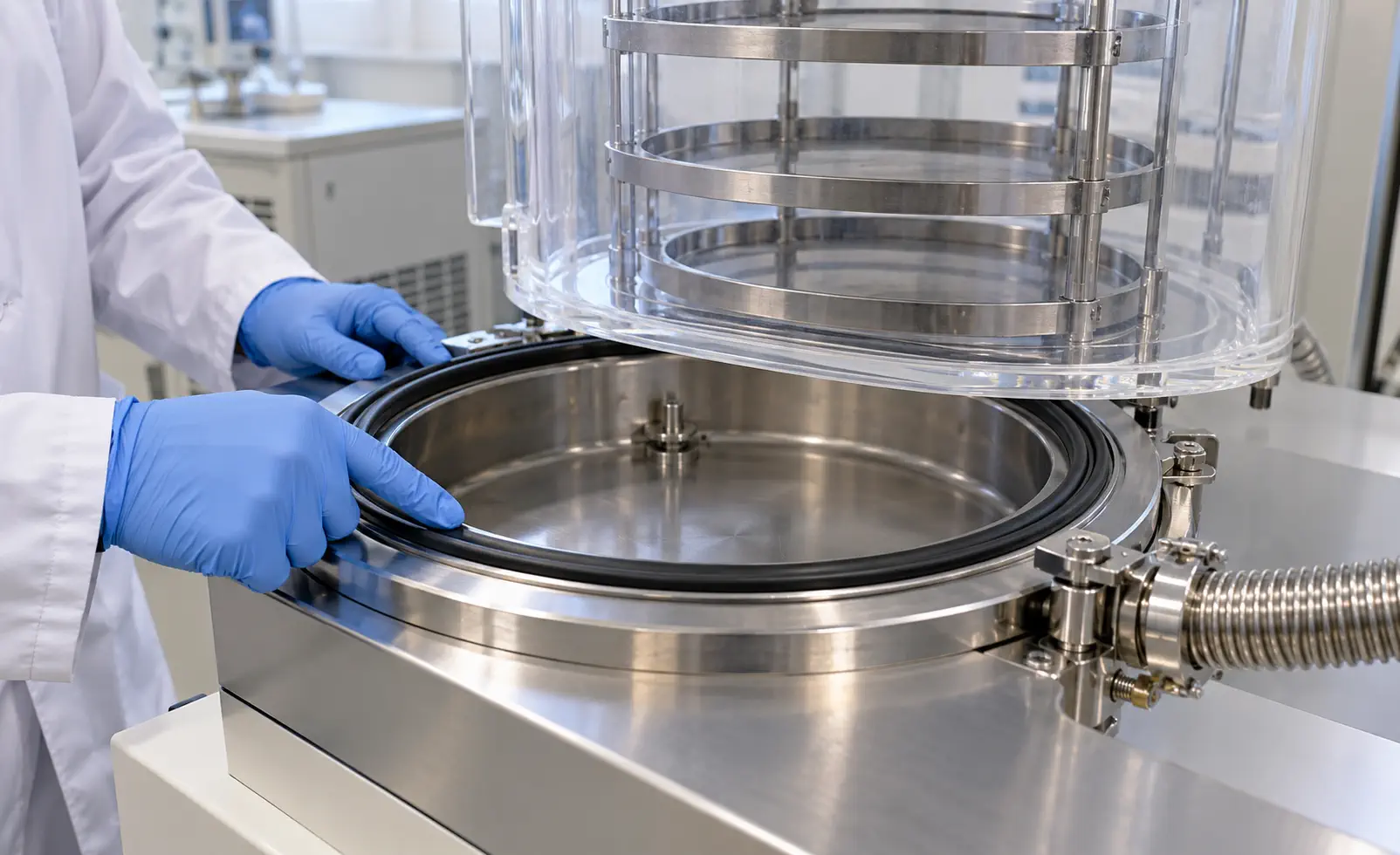
Figure 1. Representative inspection of a chamber O-ring and sealing surface. Actual geometry and approved maintenance differ by model.
A qualified technician may use a manufacturer-approved chamber isolation, pump isolation, or pressure-rise test to distinguish leaks from gas release by moist internal surfaces. A pressure-rise trace alone does not distinguish an air leak from water desorption unless the test conditions and chamber dryness are controlled. Document the isolated volume, starting pressure, temperature and test duration before comparing results.
Do not use inappropriate leak-check liquids around sensitive electronics or vacuum interfaces, tighten fittings under vacuum without an approved procedure, or open chambers before venting. If the system handles hazardous or incompatible materials, maintenance controls must follow the site risk assessment and the equipment manual.
4. Check condenser temperature and trapped ice, not just pump power
A freeze dryer removes water by sublimation from a sufficiently frozen product. Vapor must travel through the vapor path and deposit on a colder condenser surface. If ice accumulation obstructs that path, the condenser is too warm for the process, or the moisture load exceeds available capture capacity, chamber pressure can remain above the intended operating region even with a healthy vacuum pump.
The total ice mass is not the only design variable. Condenser temperature, exposed cold surface, refrigeration performance, vapor conductance, loading rate and product heat input all matter. For example, adding heat too aggressively can accelerate vapor generation before the condenser can collect it. A falling chamber pressure at low load does not guarantee acceptable performance at maximum water-removal rate.
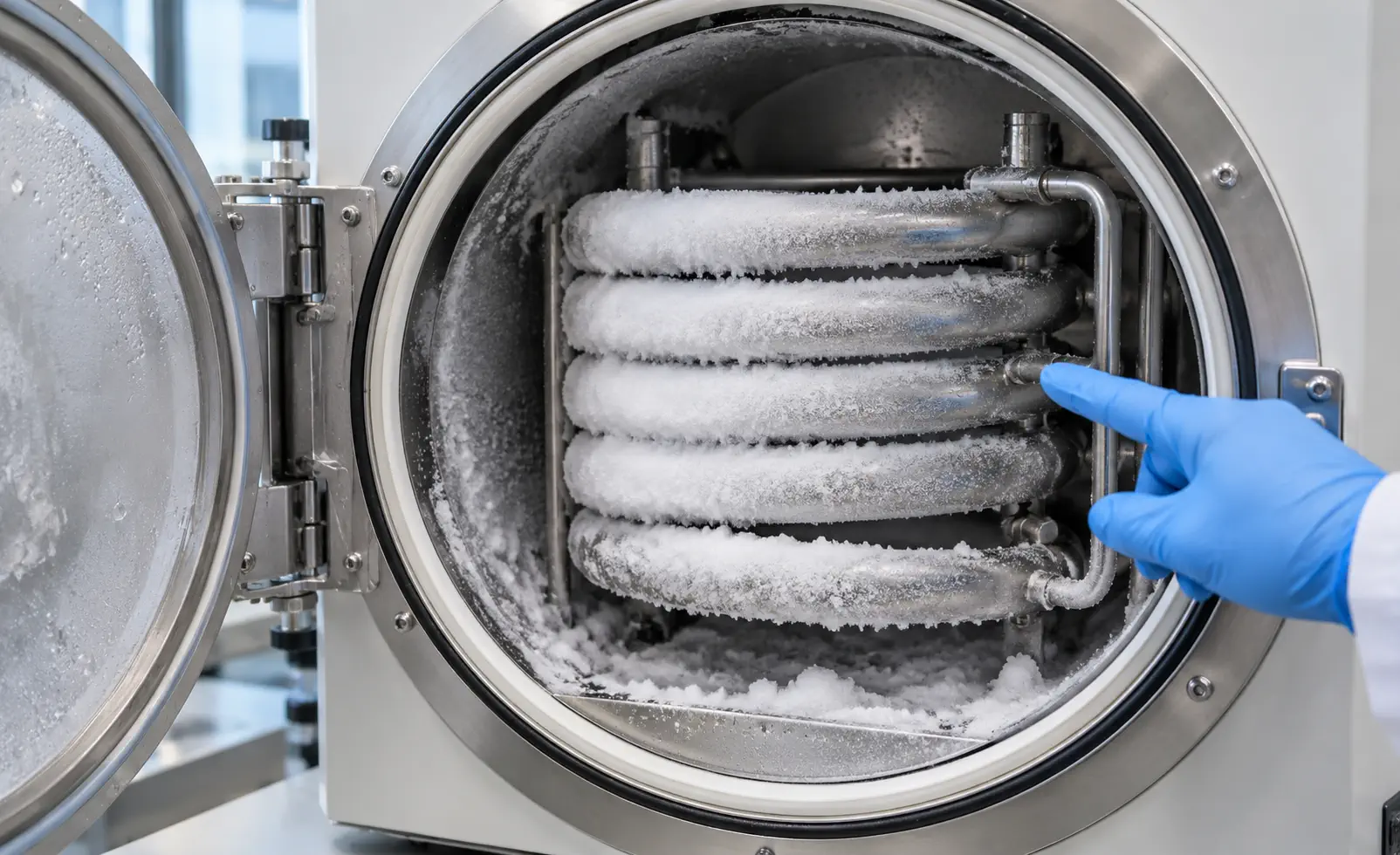
Figure 2. Editorial view of frost on a condenser assembly. Ice pattern alone cannot establish usable ice capacity or refrigeration performance.
Record the condenser temperature before loading, at maximum sublimation demand, and late in the run. Compare it with the equipment specification and the actual process recipe. If performance deteriorates as ice builds, inspect the specified defrost cycle, drain closure and refrigerating system with authorized service personnel. Do not remove ice mechanically from coils or open refrigeration circuits without approved maintenance controls.
5. Separate vacuum-pump condition from chamber or hose faults
For an oil-sealed rotary-vane pump, oil level, contamination and water exposure can impair attainable pressure. Cloudy or degraded oil is an investigative clue, not proof that the pump itself is permanently damaged. Follow the pump maker’s specified oil type, maintenance interval, isolation sequence and gas-ballast procedure. Gas ballast can help manage condensable vapor in appropriate pump designs, but it can also affect attainable pressure during use; it must not be treated as a universal switch to improve vacuum depth.
Other pump technologies require different checks. Dry pumps may have specified purge flows or inlet restrictions, and a pump selected for a clean dry gas load may not be suitable for continuous high water-vapor exposure. The engineering question is both ultimate pressure and effective pumping speed at the pressure and vapor conditions of interest, with conductance losses from hoses and valves included.
If a qualified service technician performs a pump isolation or blank-off test, use the manufacturer’s procedure and a calibrated, compatible gauge. A strong pump result at its inlet but poor performance when connected points toward the vacuum line, valves or chambers. A poor inlet result points toward pump condition, test setup or the instrument itself. Never block an exhaust port or perform an improvised test that violates pump operating limits.
6. Verify the sensor before changing the drying recipe
Vacuum gauges do not necessarily measure the same gas mixture in the same way. Pirani-type thermal-conductivity gauges can respond differently to water vapor and air; capacitance diaphragm gauges generally provide gas-independent pressure measurement within their rated operating range. An apparent pressure mismatch between two gauges during primary drying may reflect gas composition and instrument principles rather than immediate hardware failure.
Check sensor location, range, calibration history, contamination, wiring and how the controller displays data. Confirm whether the reported value is an absolute pressure and whether a unit conversion is being applied. If the dryer has only one sensor, a suitable independent calibrated gauge can help assess accuracy, but sensor installation and validation must follow the equipment design. Replacing a sensor without checking vapor conditions can conceal the actual process limitation.
7. Use a controlled diagnostic sequence, not random adjustments
A reliable investigation leaves a clear record for operators, equipment engineers and the supplier. We suggest the following sequence as a planning framework; actual test steps and service authorizations must follow the equipment manual.
Capture evidence: Save trends for pressure, condenser temperature, cycle stage, sample load, pump status and relevant alarms. Note when the deviation first began.
Check configuration: Verify units, recipe stage, vent and drain positions, hose arrangement and recent service changes before adjusting process settings.
Reproduce a dry baseline: Under an approved procedure, compare the empty and completely dry system against its own accepted pump-down performance.
Isolate the cause: Ask trained staff to test permitted chamber, line and pump boundaries, and use a known-good or calibrated pressure reading where practicable.
Assess the process load: If unloaded performance is satisfactory, examine freezing state, ice inventory, condenser temperature and the shelf or product heating rate.
Confirm the fix: Repeat a documented acceptance test under comparable conditions. Record both the equipment-side baseline and the loaded-run result.
Avoid altering vacuum setpoints, heating steps and pump service settings simultaneously. Multiple changes can make the symptom disappear without showing which variable solved the problem, leaving the next operator unable to reproduce the result.
8. What to request when buying or comparing freeze-drying equipment
A purchase specification should define the expected water load and product profile, not only chamber dimensions and a nominal vacuum value. Equipment pages often describe adjustable vacuum and drying cycles, but they do not establish a tested operating envelope for an individual material. Before comparing quotations, ask each supplier for performance criteria and the assumptions behind them.
Buyer question | Evidence worth requesting |
|---|---|
What is the condenser capacity and temperature rating? | Rated conditions, water-load basis and restrictions for the intended product |
Which vacuum pump and measurement principle are included? | Pump type, compatibility, relevant pressure range and gauge specification |
How is dry-system vacuum verified? | Factory or commissioning test method, instrument location and acceptance criteria |
What can be serviced by the operator? | Manuals covering drains, seals, defrost, pump maintenance and safe isolation |
How are loaded runs evaluated? | Representative trial criteria for product temperature, cycle time and final moisture where relevant |
For available product families, review the OLLITAL Freeze Dryer range. The OLT-168 Freeze Dryer product page outlines configurable drying-cycle functionality, but a specific pump configuration, ultimate pressure or moisture-removal performance must be confirmed for the quoted system. The model listing alone is not proof of a particular process outcome.
Practical questions from operators
Does slow pump-down always mean a leak?
No. A warm or insufficiently frozen sample, a wet chamber, vapor generated during drying, or a condenser under high load can prevent the same pump-down behavior seen in an empty dry test. Compare the two conditions before selecting a leak-search procedure.
Can a larger pump compensate for an overloaded condenser?
Not necessarily. The condenser should intercept much of the sublimed water before it reaches the pump. Increasing pump nominal capacity will not correct poor condenser capture, restricted vapor flow or an unsuitable heating recipe. Review the full vapor and refrigeration balance.
Why might two vacuum gauges disagree during primary drying?
Different sensor technologies may react differently to the changing mixture of water vapor and noncondensable gases. Calibration, placement and conductance also matter. Evaluate the gauge principle and rated range rather than treating the difference as an automatic failure.
Should we clean the condenser after every run?
Use the defrost, drainage and cleaning schedule prescribed for the equipment and its process load. Residual ice or trapped water can distort the next baseline and increase the risk of contamination or poor performance. Confirm full drainage and dryness before diagnostic comparison.
A pressure reading is a clue, not a complete diagnosis
Successful freeze dryer troubleshooting depends on seeing pressure in its operating context. An empty-system test can narrow the problem to the equipment, while the loaded trend explains whether the condenser and drying cycle are keeping pace with vapor generation. Testing seals, pump capability and instrument accuracy in a defined order prevents unnecessary parts replacement and creates a repeatable maintenance record.
At OLLITAL, we suggest sending the actual equipment model, product type, water load, pressure and condenser-temperature trends, and any empty-system results before asking for changes to the pump or refrigeration specification. That information makes a configuration or service discussion much more precise.
Need help evaluating a freeze-dryer vacuum issue or defining test requirements for a new system? Contact OLLITAL with a brief process description and your operating data.


