Pilot Distillation Column Troubleshooting: Reflux, Flooding and Separation Efficiency
2026-10-23 15:54:48How to interpret operating trends, identify hydraulic limits and write a practical distillation-column RFQ.
A temperature setpoint is not proof of separation performance
A pilot distillation column may reach a seemingly stable top temperature while its distillate composition drifts, the column pressure drop increases or liquid accumulates in the wrong place. None of those observations can be explained by temperature alone. A distillation trial must be interpreted through the combined behavior of vapor generation, reflux, feed conditions, condenser duty, internal hydraulics and measured product composition.
At OLLITAL, we recommend beginning with a defined material balance and an instrumentation map. Buyers comparing pilot columns should ask what the quoted unit can actually measure and control, not just which temperature or number of theoretical stages appears in a product description. A reliable small-scale study defines its valid operating window before trying to maximize throughput.
1 | Establish the objective and the test boundary
The first question is what the experiment must demonstrate: a required distillate composition, solvent recovery, a comparative tray-efficiency study, separation of a model liquid mixture, or a feasible operating range for a larger process. These objectives require different measurements. For binary teaching experiments, an ethanol-water mixture may be convenient; industrial multicomponent feeds need a much more specific analytical basis and may present additional safety and materials challenges.
Document the feed composition and phase, batch or continuous operation, expected feed rate, column pressure, available heating and cooling utilities, target top and bottom compositions, and intended analytical method. Clarify whether the pilot unit operates near atmospheric pressure or requires a defined vacuum or pressure envelope. Do not treat a general equipment photograph as evidence of all these capabilities.
2 | Understand what the reflux ratio actually changes
In a conventional externally refluxed column, the reflux ratio is often expressed as R = L/D, where L is the liquid returned from the overhead receiver to the column and D is the distillate withdrawn over the same period. Increasing reflux generally improves contact and can support stronger separation at a given internal configuration, but it also increases liquid traffic and condenser and reboiler duties. Very high reflux can therefore approach hydraulic or utility limits instead of producing a useful increase in accepted output.
At total reflux, net distillate withdrawal approaches zero; the simple ratio L/D is not a meaningful finite operating number. Total-reflux tests are useful for examining separation under one defined condition, but their results are not identical to continuous operation with a sustained product draw. When comparing trials, report both reflux flow and distillate draw rather than a lone reflux-ratio setpoint.
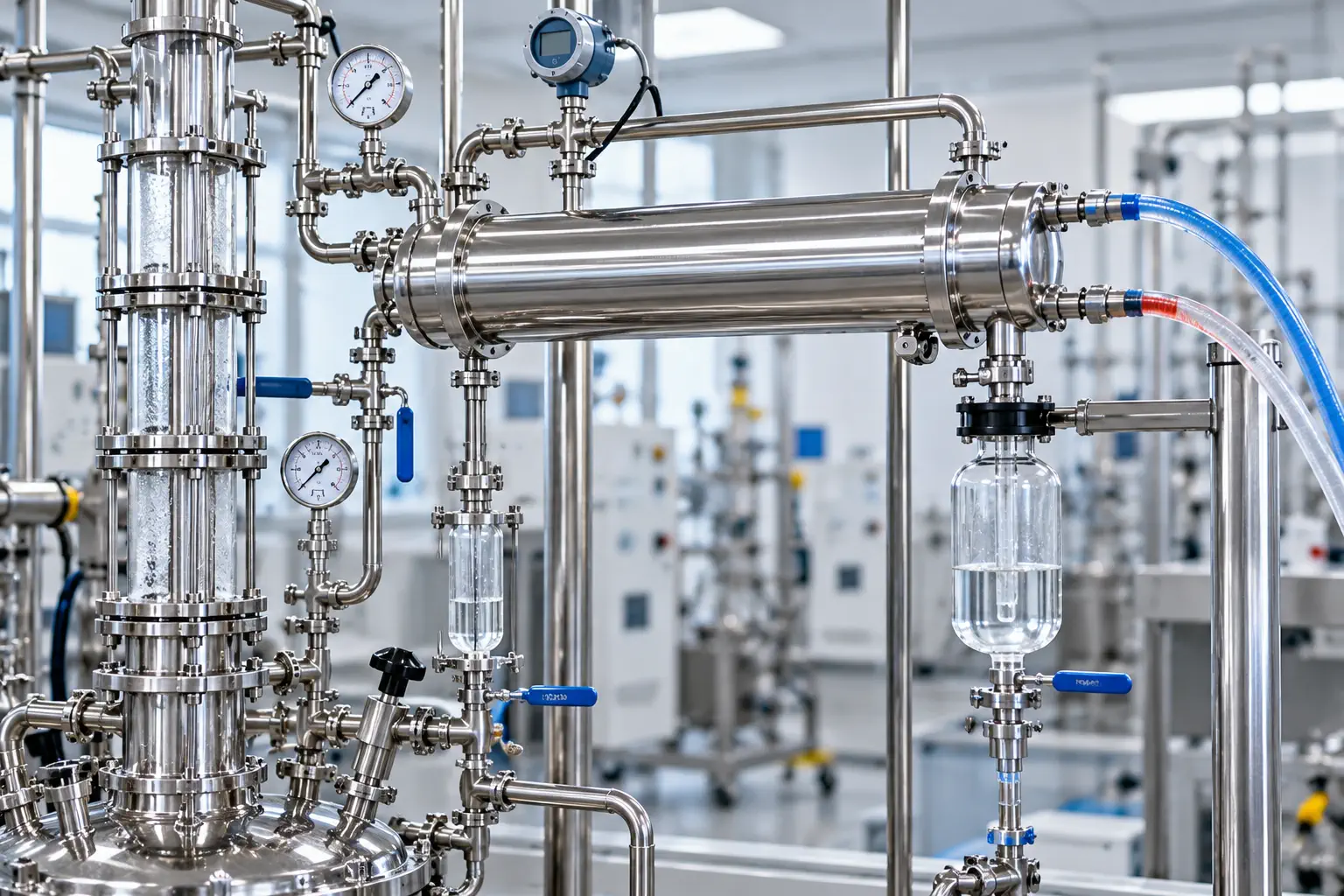
Figure 1 | Illustrative condenser, liquid receiver and associated process piping. Use the actual supplier P&ID to verify the reflux and distillate paths.
A change in top-product quality may come from reflux instability, insufficient condensation, altered feed composition or hydraulic upset. Verify condenser cooling-water inlet and outlet conditions, overhead pressure, condensate collection, reflux return and receiver level together. Increasing reflux blindly can worsen a column that already has excessive liquid holdup.
3 | Distinguish flooding, weeping and entrainment
Hydraulic operating limits depend on the installed internals. In a trayed column, high vapor load or restricted downcomer capacity can cause liquid backup and flooding. An unexpected, nonlinear rise in column pressure drop accompanied by unstable liquid levels and declining separation is a warning signature. Entrainment can move droplets upward at high vapor velocities and degrade separation before a full flood occurs.
Weeping has a different mechanism: at a low enough vapor rate in certain tray designs, liquid can fall through tray perforations or valves rather than flowing across the active tray. It is not a universal diagnosis for packed columns. Packed equipment instead needs attention to liquid distribution, loading and flooding, channeling and bed condition. The correct fault vocabulary starts with the actual hardware.
| Operating evidence | Possible explanation | Next diagnostic question |
|---|---|---|
| Pressure drop climbs sharply as heat input rises | Approaching flooding, foaming or restriction | Was feed, vapor generation or condenser pressure changed? |
| Distillate quality falls at very low boilup in a tray column | Possible weeping or weak contacting | Does the installed tray type support that diagnosis? |
| Overhead product shows unexpected heavy fraction | Entrainment, poor reflux or loss of equilibrium stages | Did reflux, vapor load or feed composition change? |
| Top temperature rises together with pressure | Condenser duty or overhead pressure instability | Are pressure and coolant trends consistent? |
| Column remains unstable after operating-point change | Fouling, control interaction or inappropriate internals | Is there a safe inspection and measured comparison plan? |
4 | Read pressure and temperature profiles as a combination
The boiling temperature of a mixture depends on its composition and pressure. Consequently, comparing a top temperature from one day with another is weak evidence if column pressure changed. A useful trend includes pressures at relevant locations, top and bottom temperatures, a feed temperature where applicable and temperature measurements along the column if actually provided. The number and position of sensors affect what can be inferred.
Compare trends only after the system has passed its transient response to a change in reboiler duty, feed or reflux. Temperature lag, holdup and thermal inertia can make short readings misleading. A stable-looking display does not prove that the overhead and bottom products satisfy their specifications. Collect and label composition samples using a repeatable protocol.
5 | Use observation sections without overinterpreting them
Glass observation sections are especially valuable in education and development because they can reveal froth, irregular wetting, entrainment or a shift in vapor-liquid contact. The OLLITAL pilot distillation-tower product description lists observation windows for particular teaching configurations, but the number and arrangement must be reconfirmed against the ordered drawing. A glass sight section is not an instrumented measurement of tray efficiency by itself.
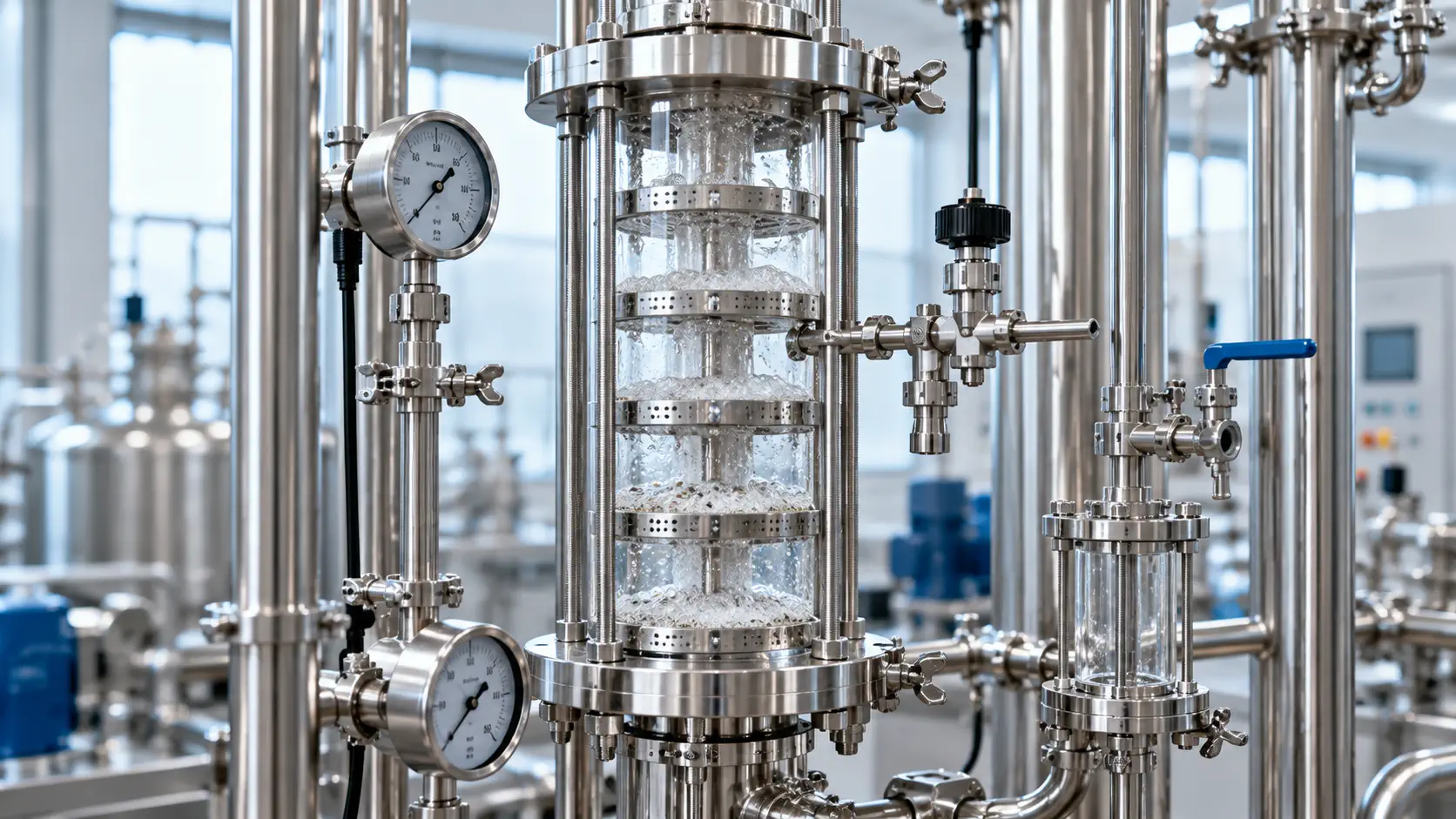
Figure 2 | Conceptual trayed-column observation section illustrating vapor-liquid contacting. Not an internal drawing or validated test image of an OLLITAL product.
If the observation pattern becomes abnormal, record it with the corresponding heat input, flow rates, column pressure and measured quality. Do not infer a root cause from appearance alone: foaming, transient liquid loading, changed feed physical properties and control interactions can produce superficially similar views. The goal is a coherent account of the run rather than a visually impressive demonstration.
6 | Verify the condenser and reboiler together
Both ends of a distillation column set its operating envelope. The reboiler supplies vapor; the condenser removes overhead heat and makes reflux possible. Raising reboiler duty can lift vapor load into a hydraulic limit even if a higher temperature appears desirable. Insufficient coolant flow, fouled heat-transfer surfaces or an improperly sized condenser may cause pressure and reflux instability. These are related but not interchangeable faults.
For the technical evaluation, request the heating method, expected duty, condenser type, utility temperatures and flows, relief and venting arrangements, pressure design, condensate drainage and control philosophy. If cooling-water variation is common at the site, record how its seasonal range affects condensation. For flammable solvents, the pressure boundary, hazardous-area requirements and solvent containment need engineering review before any test is authorized.
7 | Run controlled trials that can be compared later
A useful procedure holds composition and feed definition steady while changing one meaningful operating variable or follows a written experimental design if interactions are being studied. Record heat input, cooling conditions, reflux and distillate flows, sampling times, top and bottom compositions, pressure and temperature histories, feed and product mass, and the configuration of the column. If a high-frequency transient occurs, preserve its time sequence instead of recording only the final stable number.
When the trial ends, reconcile the mass balance to the extent the equipment permits, including receiver hold-up and residual column inventory. The reliability of a purported separation improvement falls quickly if an earlier trial had different unrecorded material in the system. Preserve run identifiers and the data behind any claimed optimum.
8 | Translate the process brief into an equipment quotation
A suitable purchase inquiry should define the intended chemistry and duty, not just request a "pilot distillation unit." The supplier needs the feed composition range and physical-property considerations, batch or continuous operation, pressure range, expected vapor and liquid rates, available utilities, required materials, analyzers, sampling locations, cleaning needs and intended output quality. Ask the vendor to identify the installed tray or packing type and provide an instrumentation and piping diagram.
OLLITAL lists a laboratory pilot distillation tower and a solvent refining tower in its catalyst-evaluation equipment category. These pages establish the general family and provide example experimental functions, but do not guarantee a particular separation efficiency for a new mixture. Review the actual quotation drawings and acceptance criteria before concluding that a pictured condenser, observation cup, vacuum accessory or analyzer is included.
| Procurement question | Evidence to request |
|---|---|
| What is inside the column? | Tray or packing drawing, number of stages/sections and allowable duties |
| How is reflux controlled? | Reflux line, distillate draw, flow measurement and operating modes |
| What determines the thermal envelope? | Heating and condensing duties with specified site utilities |
| How will quality be demonstrated? | Sampling positions, analytical method and agreed test mixture |
| What limits safe operation? | Pressure design, relief concept, materials, ventilation and interlocks |
| What is included in the delivery? | Scope drawing, commissioning plan, optional equipment and exclusions |
9 | Three common buyer questions
Is the highest reflux ratio always best? No. More reflux may improve separation in some regimes, but increases internal liquid flow and utility duty and can be counterproductive near a hydraulic constraint. The correct point is one supported by product quality, capacity and stability data.
Can a higher bottom temperature fix low top-product purity? Not reliably. A higher reboiler duty affects vapor traffic as well as temperature. Check feed, pressure, condenser and reflux behavior first; excessive duty may worsen entrainment or flooding.
Will a pilot result scale directly to industrial throughput? No. Larger columns differ in geometry, distributor design, hydraulics, heat integration and control response. Use the pilot result as evidence in a documented scale-up basis, not as an automatic performance guarantee.
10 | Calculate the quality result without hiding the mass balance
Pilot trials should separate two questions: how well does the equipment separate the selected components, and how much useful product does it actually deliver? A high overhead concentration obtained at very low draw rate is not necessarily the most useful process. Keep the distillate and bottoms compositions, collection rates, feed composition and total mass balance in the same run report. If there are unmeasured losses or a drifting accumulator level, mark that uncertainty rather than presenting a misleading recovery percentage.
For an approximately binary mixture, report the analysis method and its calibration basis, not only a refractometer or density reading. Temperature compensation and composition-dependent correlations may matter. For multicomponent feeds, a single top temperature or density may not describe product quality. Establish the target key components, impurity limits and analytical repeatability before equipment acceptance. Samples collected during startup should not be quietly combined with steady-state samples.
A claim of tray efficiency or equivalent theoretical stages is also conditional on the mixture, column internals, hydraulics and calculation method. Measured product quality under one reflux condition is not enough to infer a general stage efficiency across throughput. If the project requires performance comparison, agree in advance on the model, the relevant equilibrium information and the measurements needed to calculate the stated metric.
11 | Commission for repeatability, maintenance and safe shutdown
For factory acceptance or on-site commissioning, ask the supplier to demonstrate safe startup, total-reflux operation where applicable, controlled product draw, stable condenser duty, sample collection and an orderly shutdown. Check that the temperature points, pressure indicators, reflux valve positions and instrument displays correspond to the delivered piping and instrumentation diagram. Simple, documented operator actions make pilot data far more reproducible across users.
Maintenance accessibility is a technical selection criterion. Observation glass and gaskets, receiver drains, reflux lines and condenser surfaces need suitable cleaning and inspection procedures. The solvent may dictate gasket materials, seal design, explosion protection, exhaust treatment or a closed collection arrangement. These are application-specific engineering matters; a generic laboratory demonstration does not establish compliance for every chemical duty.
The acceptance record should include a clean configuration list, alarm and interlock demonstration where provided, calibration status, coolant and power requirements, a sample dataset and the agreed operating envelope. For pressure or flammable-solvent service, protect relief and vent paths, follow site procedures and never improvise manual intervention on hot or pressurized parts. Treat supplier assistance as part of a documented commissioning plan rather than a substitute for the site safety review.
Conclusion: ask for a validated operating window
Distillation troubleshooting succeeds when composition, thermal duties and hydraulic evidence are interpreted together. Flooding, low-load contacting and condenser limitations require different remedies. For laboratory and pilot systems, the most transferable outcome is not one maximum-purity number, but a tested operating range with its feed definition, internal configuration and measurement methods recorded.
At OLLITAL, we recommend sharing the intended mixture, pressure conditions, recovery or purity target and available utilities before deciding on the pilot column configuration. A process-specific equipment drawing and a modest, repeatable acceptance test are more useful than copying setpoints from another laboratory.
See our pilot distillation tower and solvent refining tower for example product families, or explore the related equipment category. Exact components and operating limits must be confirmed for each order.
Planning a pilot distillation study? Contact OLLITAL with your feed composition, target separation, utilities and intended test schedule for an application review.


