When to Harvest a Microbial Fermentation Batch: Biomass, Product Yield and Safe Broth Transfer
2026-10-19 17:18:28A practical endpoint-decision and transfer-readiness guide for laboratory and stainless steel bioreactors
The decision is not simply whether the batch has stopped growing
A fermentation can reach its highest cell density before it reaches the best product recovery point. In another process, the product may begin to decline while biomass is still increasing. If the target is an extracellular enzyme or metabolite, the critical signal may be product concentration and stability in the broth; if the target is biomass or an intracellular component, viable cell mass or physiological condition may matter more. There is no universal harvest hour that works for every microorganism, medium and operating mode.
At OLLITAL, we recommend treating harvest timing as a decision supported by both process history and representative offline measurements. The vessel controller can show temperature, pH, dissolved oxygen (DO), agitation, gas supply and feeding events. Those data help explain what happened, but they do not independently prove that the desired product is at its best recovery point. The endpoint should be defined before the run and reviewed against the actual batch evidence.
Quick answer: what determines the best harvest time?
The practical endpoint occurs when the defined product or biomass objective has been met, further operation is unlikely to provide an acceptable improvement, and the downstream collection route is ready. Confirm the decision using a fit-for-purpose assay or biomass measure, supporting process trends, the specified quality window and an approved sampling plan. Then verify that transfer hardware, receiving capacity, containment, temperature and records are ready before changing the state of the system.
Start with the material you intend to recover
Biomass-led production. When the organism or cellular material itself is the product of interest, a laboratory may prioritize viable cell concentration, dry-cell weight, optical density within its validated range, morphology, or another validated biomass metric. A plateau in a scatter-based optical-density reading may reflect instrument range or aggregation rather than true cessation of growth, so selected confirmation tests remain important.
Extracellular product recovery. When the target is released into the liquid phase, the key comparison is often product titer, productivity, impurity development and the effort required by the next separation operation. A high titer is not automatically the best harvest if a prolonged hold changes product quality, broth rheology or filterability. The collection pathway should be considered when the endpoint is defined.
Intracellular product recovery. For products retained in cells, target abundance, cell condition and the planned disruption or separation method may determine the practical endpoint. Biomass alone is an incomplete proxy for final recovery. In all three cases, the method used to assess product quality must be suitable for the application; a generic pH or DO trace is not a substitute for that assessment.
Design a sampling plan that can actually support an endpoint decision
A good fermentation sampling plan states when samples are collected, where they are withdrawn, how representative they are and which measurements will be used for the endpoint decision. Before the expected endpoint, sampling may need to become more frequent to capture changes that would be missed by a daily sample. The appropriate interval depends on the process and its risk; no fixed schedule can be assumed from equipment size.
Record sample identity, time, vessel or location, sample volume, handling method, assay result and any deviations. A grab sample drawn after a long interruption, an unusually large air bubble or a changed mixing condition may not represent the same state as earlier samples. Where oxygen demand or solids distribution varies rapidly, consistent mixing and sampling conditions matter as much as the analytical method. Protect the sterile process boundary according to the approved equipment procedure rather than improvising an open sample point.
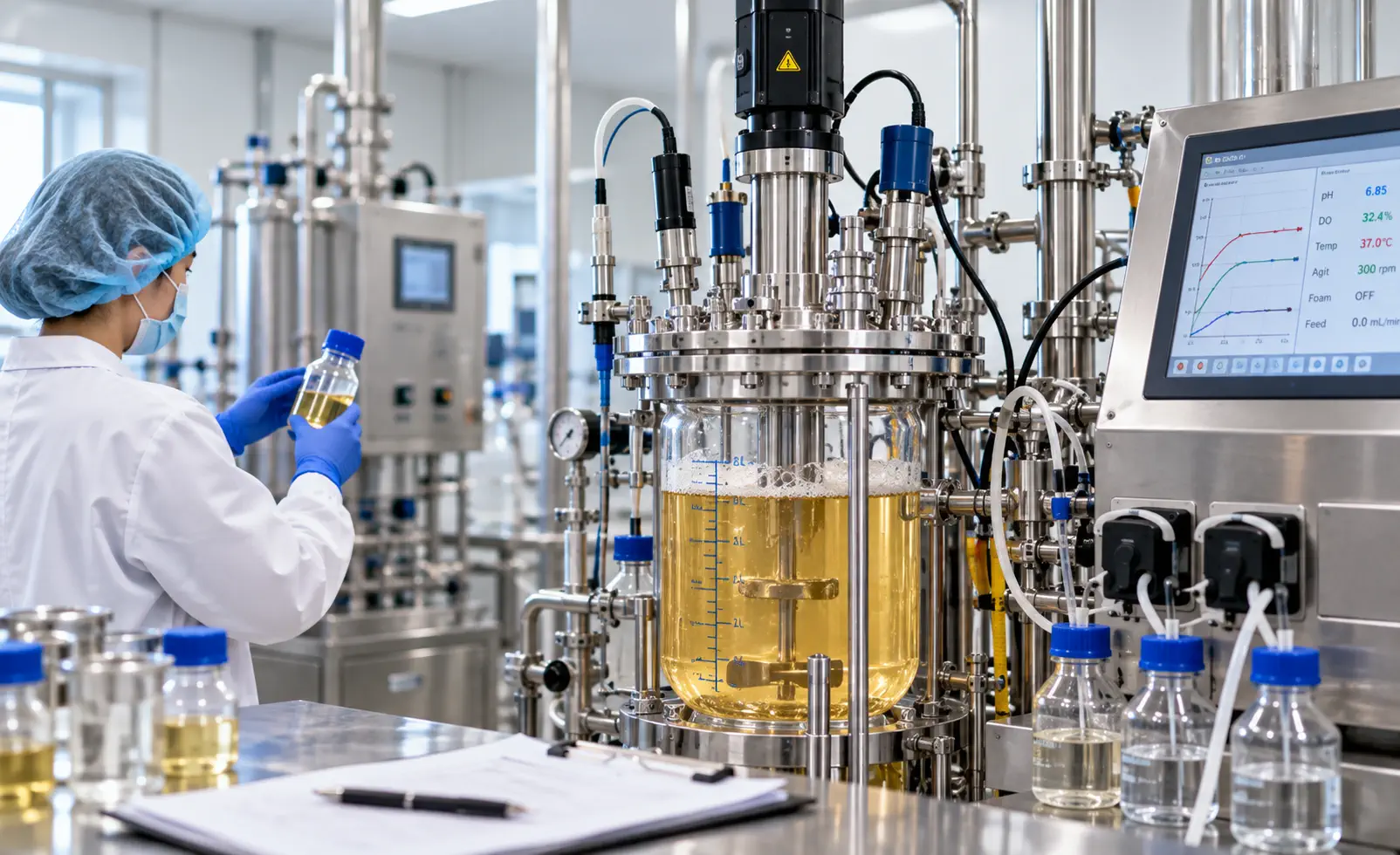
Figure 1. Editorial illustration of culture sampling, operator observation and process-trend checks. Shown equipment and displayed readings are conceptual, not verified OLLITAL product specifications.
Read the process trends as context, not as a product assay
The most useful operator review combines changes in DO, pH, temperature, agitation, aeration, gas composition if installed, feed rate and sample measurements along one timeline. A DO spike may suggest reduced oxygen uptake, but it may also follow an airflow adjustment, sensor intervention or mixing change. A pH shift can indicate metabolic change or dosing activity; neither explanation can be selected from the pH trace alone. The same caution applies to growth lag, foam changes and increasing temperature-control demand.
When a trend looks different from previous batches, align it with the actual event record. Was a feed pump commanded to run, and did liquid move? Was the gas setpoint adjusted? Was an electrode calibrated or replaced? Did a temperature alarm or hold interval occur? Where available, compare off-gas data, material balance, offline substrate tests and product measurements on a consistent time basis. This is a better way to separate real biological transitions from control-system artifacts.
For a usable endpoint, ask a forward-looking question: what additional yield or quality improvement is expected from another period of culture, and what risk or cost is incurred by waiting? The answer is process-specific. A plateau in one measurement is a prompt for review, not an automatic command to harvest.
Common false endpoint signals to avoid
Signal | Why it can mislead | Check before declaring harvest |
|---|---|---|
OD or turbidity stops increasing | Optical range limits, aggregates or morphology changes may mask a biomass change. | Use a validated dilution, cell-count, dry-weight or complementary method. |
DO rises sharply | Oxygen demand may fall, but aeration, probe response or mixing may also have changed. | Align the event with gas, agitation, feed and sensor history. |
pH becomes stable | Automatic acid or base addition can conceal continued metabolic change. | Review dosing records, substrate and product measures. |
Feed was completed | A dosing program ending does not prove product formation is complete. | Review assay trend and the intended production objective. |
One sample has highest titer | Single measurements can be affected by sampling and assay uncertainty. | Confirm a credible trend and approved quality window. |
Table 1. Interpretation prompts, not universal harvest criteria.
Harvest readiness has a second gate: the transfer path
Even after the endpoint is approved, broth transfer should not begin until the receiving system and process boundary are ready. For small glass bioreactors, collection may be manual or via a configured sampling or drainage arrangement. For a larger stainless steel fermenter, the design may involve dedicated outlet valves, sanitary transfer connections, a pump or pressure-assisted route, and a receiving vessel. Which parts are supplied is a configuration question—not something that can be assumed from a general product-family photograph.
The team should agree where the sterile or contained boundary ends, which components require cleaning or sterilization, what product-contact materials are acceptable, whether any dead legs or poorly drained pockets exist, and whether the downstream line is compatible with the broth’s viscosity, solids and foam. If a collection vessel must be cooled, protected from oxygen or held within a defined temperature window, these conditions need to be established before transfer starts.
Pressure and vacuum limitations are especially important. A receiving vessel must never be assumed to withstand arbitrary positive or negative pressure; gas displacement, vent filtration and safe isolation are part of the transfer design. Follow the actual machine manual and site procedures, including contained handling of potentially hazardous cultures. Operators should not bypass an exhaust filter or open a pressurized line to speed up collection.
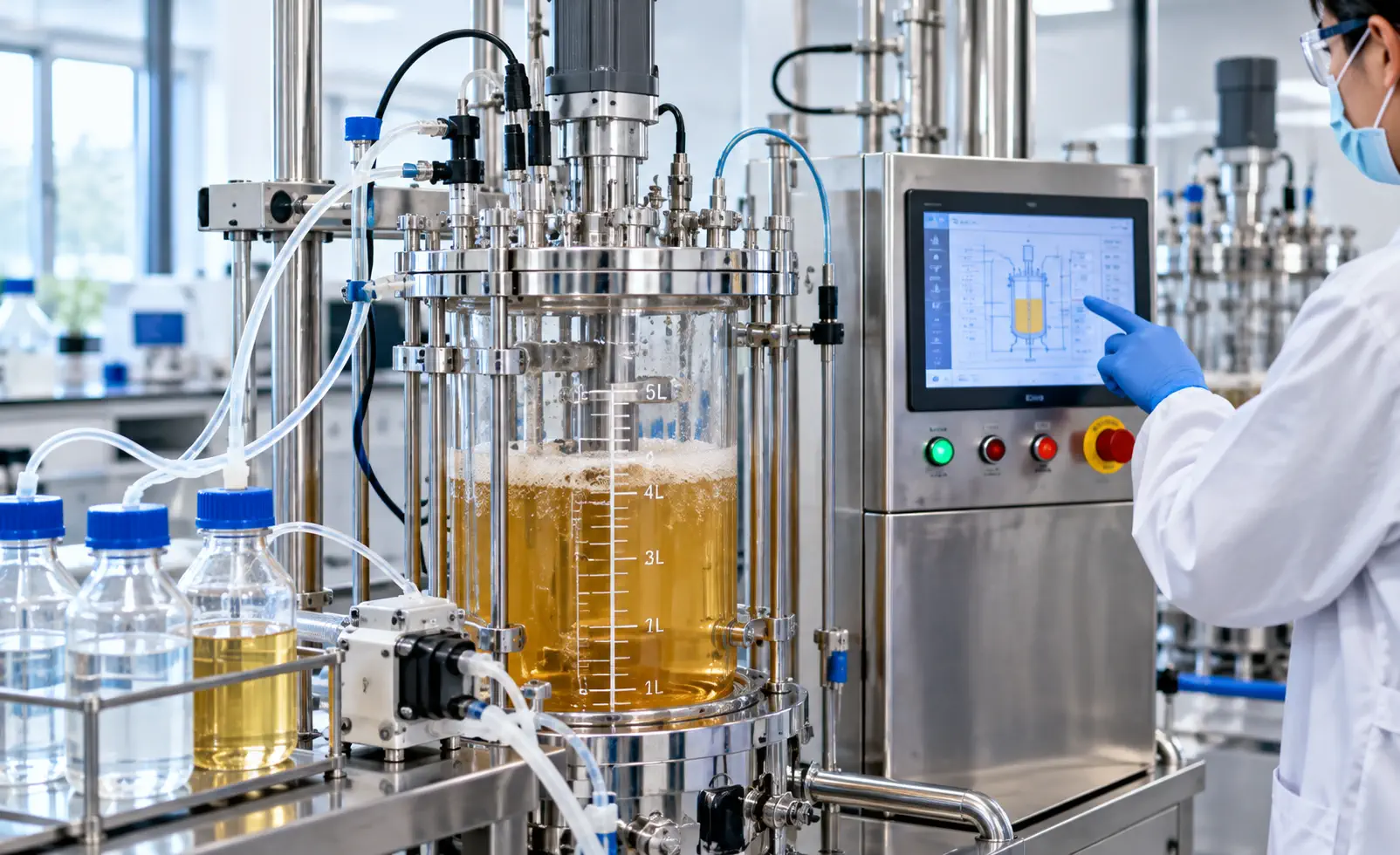
Figure 2. Conceptual laboratory preparation scene used to discuss operator confirmation and process interfaces before transfer; it is not an official OLLITAL transfer-system photograph.
How glass and stainless steel bioreactor projects differ at the harvest stage
The Customizable Glassware Bioreactor 5L for Cell Culture page describes a sampling port and monitoring functions for a compact vessel. Those features support laboratory observations and sampling, but a sampling port should not be presumed to be a high-throughput harvesting connection. Buyers planning full-batch collection should specifically review the route, valve arrangement, material compatibility and permissible transfer method.
The OLT-500-C1 Stainless Steel Bioreactor Fermentor product page identifies process monitoring and customizable ports. Its published configuration gives a starting point for discussing transfer requirements, not confirmation that a specific pump, bottom outlet, aseptic connector or receiving tank is included. At larger scales, transfer time, residue retention, access for cleaning, connection ergonomics and interfaces with downstream separation can become material project requirements.
For smaller experiments, the team may accept a more hands-on approach if the process and containment rules permit it. For repeated production, a defined transfer pathway can reduce variability and manual interventions. The right choice depends on the broth, the end product, the next process step and the facility’s established safety and hygiene requirements—not volume alone.
An endpoint-to-transfer handover record worth keeping
We recommend a single-page handover that connects the biological decision with the equipment action. It should be understandable to someone who did not operate the whole batch. This is particularly valuable when operations, laboratory testing and downstream-processing teams are different people.
Record item | Decision or evidence to retain |
|---|---|
Endpoint authorization | Target biomass/product criteria, assay result, decision time and approver. |
Batch history | Relevant pH, DO, temperature, gas, agitation, feed and alarm records. |
Sample traceability | Sample times, handling, test method, repeats and unresolved discrepancies. |
Receiving readiness | Receiving capacity, identification, compatible materials and preparation status. |
Transfer boundary | Approved route, valves, hoses, filters, connections and required containment. |
Process handover | Expected transfer window, temperature limits and records of deviations. |
Table 2. Suggested harvest handover content; tailor it to the actual process and site SOPs.
Procurement questions before approving the vessel specification
For a new bioreactor project, ask the supplier and the operating team to resolve a small set of questions before ordering: What is the maximum intended working volume, and how much headspace must remain? How will a representative sample be taken? Does the sampling connection remain usable under the intended process conditions? What is the designated full-batch removal route? Which valves and hoses are included in the quoted scope? What pressure, vacuum and flow constraints apply? Will the broth contain solids or be unusually viscous? Who supplies the receiving tank and any necessary pump or filtration equipment?
These questions also help define FAT and SAT discussions. A demonstration that the controller records pH and temperature does not show that the delivered system can transfer a particular broth without product loss or contamination. Conversely, a functioning discharge line does not demonstrate that the selected harvest criterion is scientifically appropriate. The two gates need separate evidence.
Frequently asked questions
Is the highest biomass reading always the best harvest point? No. It may be relevant when biomass is the target, but a product-formation process can have a different optimal endpoint, and biomass tests themselves have measurement limitations. Define the target outcome first.
Can I determine the harvest time from DO or pH alone? Not reliably. Controller trends help interpret the state of the batch, but a process endpoint normally requires a validated biomass, substrate, product or quality assessment, depending on the objective.
Is an installed sampling port the same as a discharge valve? No. A sampling port may be suited to small analytical withdrawals, while full-batch removal can require different flow area, containment, cleaning access and transfer hardware. Confirm the delivered configuration.
Should I cool the broth before harvesting? Only if the process requires it and the approved equipment and quality procedure support it. Cooling needs depend on product stability, contamination risk, downstream hold limits and heat-transfer capability.
Conclusion: make the biological endpoint and equipment readiness agree
The best microbial fermentation harvest time is not simply the end of a programmed sequence. It is the point at which the intended biological or product objective has been supported by evidence and the next operation can proceed within the approved process boundary. Align offline analysis with the time history of the vessel, then confirm receiving capacity, connections, transfer conditions and responsibility for the handover.
At OLLITAL, we can review your intended working volume, sampling method and proposed transfer interface alongside the Laboratory Small Glass Bioreactor Fermenter or the stainless steel platform. If you are specifying a new system, Contact OLLITAL with your culture type, recovery objective and proposed harvest route so that the equipment discussion reflects the actual process rather than an assumed discharge configuration.


